A practical guide for traveling with mobility equipment, including tips on renting Hoyer lifts, managing shower chairs, and flying safely with wheelchairs.
My Approach to Traveling With Medical Equipment
Traveling with medical equipment can feel overwhelming, but the process becomes much smoother with the right preparation and tools. Over the years, I’ve visited multiple cities and countries while bringing essential items like my travel shower chair, BiPAP machine, and transfer slings. For Hoyer lifts, I always rent locally rather than traveling with my own—most major destinations offer reliable rental options, and it saves a lot of hassle.
Before booking any trip, I make sure the hotel is truly accessible and that the equipment I rely on will work in the space.
In this guide, I’ll walk through how I plan, coordinate, and manage all of my medical equipment needs so you can approach your own travels with more confidence and fewer surprises.
Renting Hoyer Lifts Around the World
What’s Worked Well for Me
Doing thorough research before I travel has been key to successfully renting Hoyer lifts abroad. I start by searching Google for local mobility equipment rental companies, but the terminology can vary by country. For example, in Amsterdam, Paris, and London, a Hoyer lift is commonly called a “patient hoist.” Once I learned that, finding the right companies became much easier.
Most providers list their rental prices and delivery fees directly on their websites. If they don’t, I typically reach out using their contact form or email to request a quote.
Clear communication is essential. I make sure to double-check every detail of my reservation, and about one to two weeks before my trip, I send a confirmation email to ensure everything is still on track.
Companies I Trust
These are the companies I’ve personally rented Hoyer lifts from. Each handled delivery and pickup directly at the place I was staying. Prices vary, but I’ve had positive experiences with all of them.
- Amsterdam, Netherlands – Accessible Travel
- Paris, France – Bastide Paris
- London, United Kingdom – Shelden Healthcare
- Cancun, Mexico – Cancun Accesible
- South Florida – Family Rentals
- Phoenix, Arizona – AZ MediQuip
- East Texas – Area Medical Supplies
How I Prep Hotels Ahead of Time
Confirming Accessibility Before Booking
Before I book any hotel, I reach out directly to confirm that the room meets my specific accessibility needs. For me, that means a true roll-in shower and enough clearance under the bed for a Hoyer lift—both are non-negotiable. In a few situations where hotels didn’t have beds with adequate clearance, I’ve chosen rooms with pull-out couches instead. It’s not ideal, but it’s been a workable solution when accessibility options are limited.
Coordinating Equipment Delivery and Pickup
Since I rent a Hoyer lift in every city I travel to, I always notify the hotel of the delivery details in advance. I provide the rental company’s name along with the expected delivery and pickup times. Thanks to this preparation, the process is usually seamless—the lift is often already in my room when I arrive. That consistency is exactly why I plan so thoroughly.
The Shower Chair That Goes Everywhere With Me
For local trips in my vehicle, I usually bring my regular personal shower chair. For longer trips, however, I rely on my travel shower chair—a game-changer I purchased a few years ago before our trip to Playa Mujeres.
I use the Multichair Foldable Travel Shower/Commode Chair from 1800Wheelchair.com. It folds compactly to fit in luggage, making it easy to transport. While it’s a bit of an investment, it has made traveling so much easier. My fiancée, Kathy, can set it up in under 15 minutes once we arrive at a hotel, allowing me to safely shower and use the restroom. The chair’s adjustable legs also accommodate a variety of toilet heights, which is incredibly helpful in unfamiliar bathrooms.
When flying with Delta, I check the chair as medical equipment, and it has always been accepted free of charge—something that’s standard for flights originating or arriving in the United States.
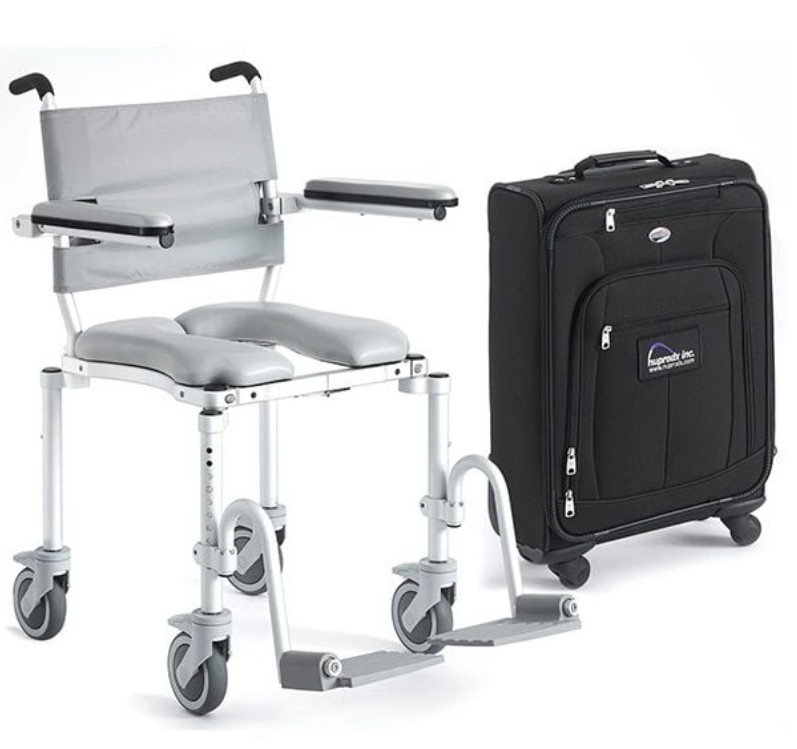
NuProdx Mobility offers similar travel shower chairs that may be more affordable, though I haven’t personally used one of their models.
Why I Always Fly With the AbleSling
When I first started traveling, airline staff would transfer me into my seat using underarm lifts. It was painful, unsafe, and often left me bruised before my trip had even begun. Those early experiences made flying stressful and took away from the excitement of traveling.
After realizing I couldn’t be the only person dealing with this, I started searching for a better solution—and that’s when I discovered the AbleSling. It’s a transfer sling designed specifically for wheelchair users, created by Josh Wintersgill in 2018, who also lives with SMA Type 3.
The sling has multiple handles, which allow staff to transfer me safely and comfortably onto the plane seat. Most crew members are relieved when they see it and often tell me they wish more passengers traveled with one. I do take a minute to explain how to use it properly, but it’s simple and makes the entire process much smoother.
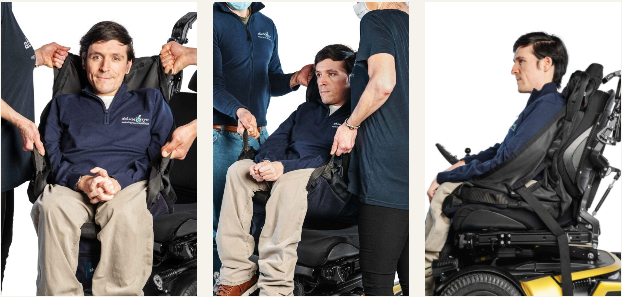
I can’t recommend the AbleSling enough—it transformed my flying experience, and I won’t travel without it again.
My BiPAP Travel Routine
Traveling with my BiPAP has been surprisingly simple. I pack it in the same suitcase as my travel shower chair and Hoyer sling to keep everything together. Since distilled water isn’t always easy to find, I typically use regular bottled water, which has worked well without any issues. When I’m traveling within the U.S., I’ve also picked up distilled water at nearby stores in cities like Miami and Chicago. And on occasion, resorts—like the one I stayed at in Playa Mujeres—have provided distilled water as well.
Tips From Experience
Even with careful planning, things don’t always go perfectly once you arrive. On a trip to Arizona, I had arranged for a Hoyer lift to be delivered to my Airbnb earlier in the day. When I showed up, nothing had arrived. After calling the company, I learned it had accidentally been left off the delivery truck. Fortunately, they were able to send it out within the hour—but only because I contacted them right away.
This experience reinforced how important it is to double- and triple-check equipment deliveries. Reaching out early gives you time to fix issues before companies close for the day. A quick call can make the difference between a small inconvenience and a major problem.
Everyone has their own preferences when it comes to Hoyer slings, and rental companies don’t always provide the type or style I’m used to. Because of that, I always bring my own sling from home.
Final Thoughts
Traveling with medical equipment takes effort, planning, and patience—but it’s absolutely possible, and it’s absolutely worth it. These tools and routines have allowed me to explore new places, make lasting memories, and travel with confidence instead of stress.
No two travelers have the same needs, but I hope the experiences I’ve shared help you feel more prepared and empowered. With the right equipment, clear communication, and a little extra planning, you can focus less on logistics and more on actually enjoying your trip.
If you have questions or want help planning your own accessible travel setup, I’m always happy to share what I’ve learned.